
Plastic limit Testing

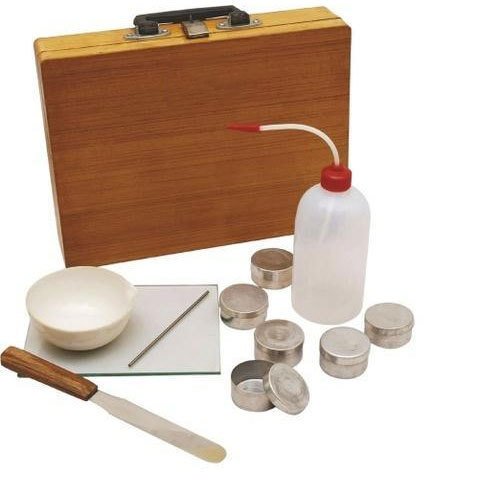
Plastic Limit Testing:
The Plastic Limit Test is a laboratory test used to determine the plastic limit (PL) of soil, which is the moisture content at which a soil transitions from a plastic state (moldable) to a semi-solid state. This test is part of the Atterberg limits and is essential for understanding the consistency and behavior of fine-grained soils, particularly for classification purposes in geotechnical engineering.
Purpose of Plastic Limit Testing:
The primary purpose of the Plastic Limit Test is to determine the moisture content at which the soil loses its plasticity and becomes friable or brittle. This information helps in assessing the soil's suitability for construction purposes, particularly for foundations and roads.
Test Procedure for Plastic Limit Testing:
- Soil Sample Preparation: A representative sample of the soil is taken, typically after sieving to remove larger particles. The sample is thoroughly mixed to ensure a homogeneous consistency.
- Moisture Content Adjustment: The soil is initially at a moisture content above its plastic limit. Water is gradually removed by kneading and rolling the soil until it reaches a consistency where it starts to lose its plasticity.
- Rolling the Soil: A portion of the soil sample is rolled on a non-porous surface into a thread (approximately 3 mm in diameter). This rolling is done until the soil starts crumbling or breaking into pieces.
- Measuring the Moisture Content: The soil is weighed before and after the rolling process to determine the moisture content at which it changes from plastic to semi-solid.
Calculation of Results:
The moisture content is calculated using the formula:
Plastic Limit (PL) = (Weight of Moisture / Weight of Dry Soil) * 100
The result gives the moisture content at which the soil loses its plasticity. This is known as the Plastic Limit (PL). The test typically results in a moisture content ranging between 10-40% depending on the soil type.
Plastic Limit Test Results:
The results of the Plastic Limit Test provide the following important value:
- Plastic Limit (PL): The moisture content at which the soil transitions from a plastic state to a semi-solid state. It is expressed as a percentage of the dry weight of the soil.
Importance of Plastic Limit Testing:
Plastic Limit Testing is crucial for the following reasons:
- Helps in classifying fine-grained soils based on their plasticity, which is essential for assessing their engineering properties.
- Used to determine the workability of soil, particularly in construction and earthworks.
- Provides insight into the soil's behavior under varying moisture conditions, which is important for designing foundations and pavements.
Applications of Plastic Limit Testing:
Plastic Limit Testing is commonly used in various civil engineering applications, including:
- Classification of fine-grained soils for use in construction projects.
- Assessment of soil suitability for embankments, roads, and foundations.
- Determining the consistency and strength of soil for designing earthworks and pavements.
- Identifying the soil's potential for shrinkage and swelling, which impacts its stability.
Test Method:
IS: 2720 (Part 5) – 1985 provides the standard procedure for performing the plastic limit test in India.
Want to speak to our Customer Care Executive?
Just Submit Your Contact Details and We’ll be get in Touch With You Shortly.