
Concrete Paver Blocks Testing

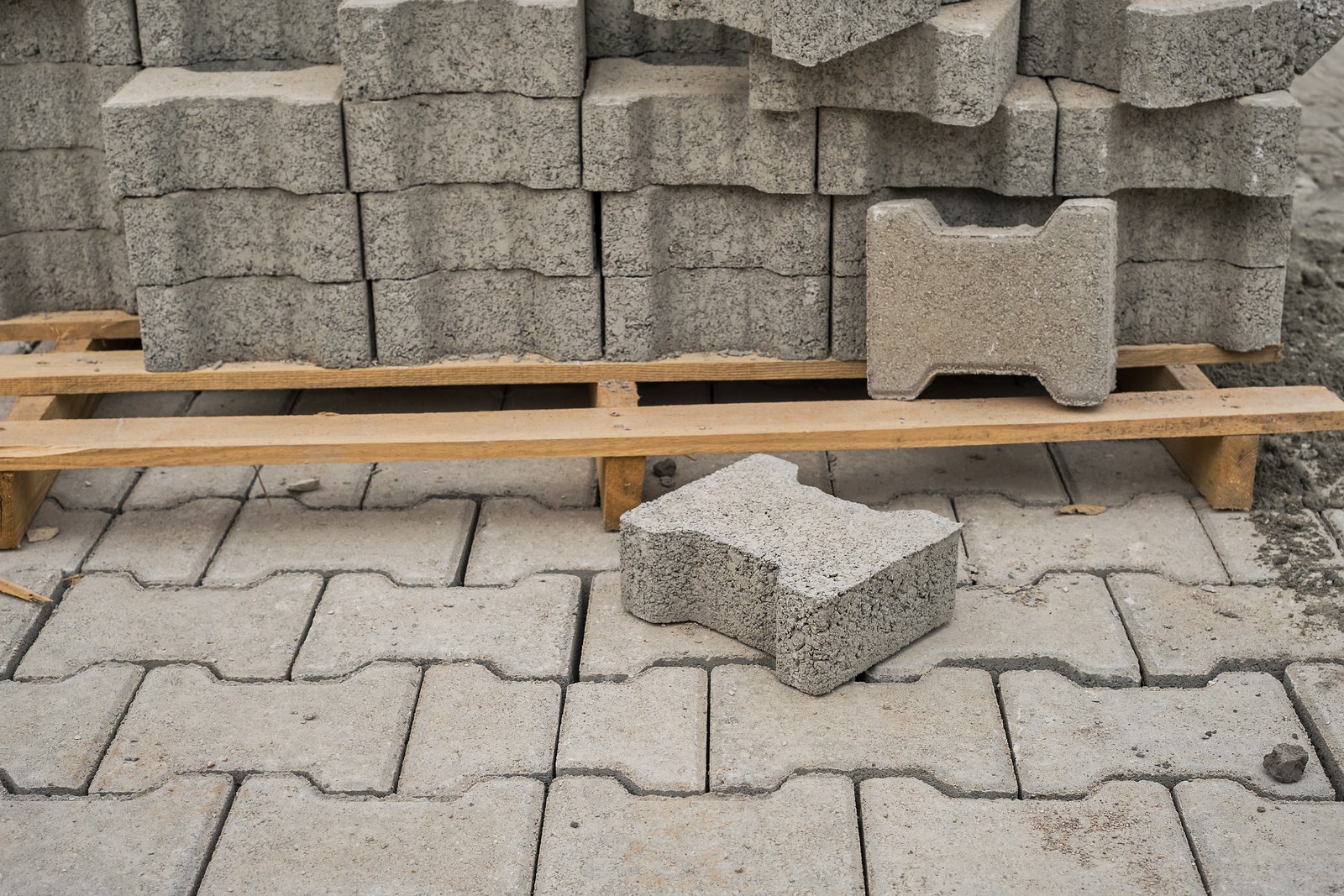
Concrete Paver Block Testing:
Concrete paver blocks are widely used for paving roads, footpaths, parking areas, and industrial floors. To ensure their durability, load-bearing capacity, and performance, they are tested as per IS: 15658 standards.
Purpose of Paver Block Testing:
Testing evaluates the strength, dimensional accuracy, water absorption, and abrasion resistance of paver blocks to ensure they meet the required standards for heavy traffic or pedestrian use.
Key Tests for Concrete Paver Blocks:
- Compressive Strength: Measures the ability of the block to withstand load without failure.
Test Method: IS: 15658 - Water Absorption: Indicates porosity and durability. Lower water absorption implies better quality.
Test Method: IS: 15658 - Split Tensile Strength: Assesses the tensile strength indirectly, critical for pavement applications.
Test Method: IS: 15658 - Abrasion Resistance: Measures the wear resistance of the surface, important for high-traffic areas.
Test Method: IS: 15658 - Dimension (Length, Width, Height): Verifies uniformity and tolerance to maintain interlocking and aesthetics.
Test Method: IS: 15658 - Density: Determines mass per unit volume, influencing strength and handling.
Test Method: IS: 15658
Importance of Paver Block Testing:
- Ensures structural performance under expected traffic loads.
- Improves longevity and reduces maintenance costs.
- Guarantees aesthetic appeal and fit through dimensional accuracy.
- Validates compliance with IS specifications and project requirements.
Applicable Standards:
- IS: 15658 – Precast Concrete Blocks for Paving – Specification
Want to speak to our Customer Care Executive?
Just Submit Your Contact Details and We’ll be get in Touch With You Shortly.
© 2025 All Rights
Reserved.
Designed by CHITRI Enlargesoft IT Hub Pvt. Ltd.