
Flyash Chemical Testing

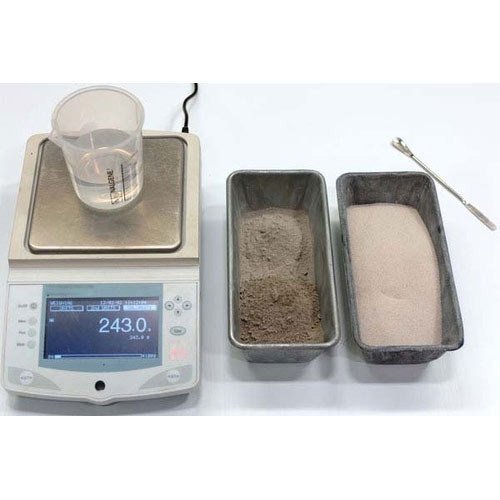
Fly Ash Chemical Testing:
Fly ash is a by-product of coal combustion in thermal power plants and is widely used as a supplementary cementitious material in construction. Chemical testing of fly ash is essential to evaluate its suitability for use in concrete and other construction applications. The tests help ensure compliance with standards like IS: 3812 and assess pozzolanic activity, durability, and safety.
Purpose of Fly Ash Chemical Testing:
The primary objective of chemical testing is to determine the chemical composition of fly ash, ensuring it meets the specified limits for effective performance as a pozzolanic material and to avoid any detrimental effects in concrete or soil stabilization applications.
Common Chemical Parameters Tested in Fly Ash:
- Silicon Dioxide (SiO₂): Contributes to pozzolanic activity, improving the long-term strength and durability of concrete.
- Aluminium Oxide (Al₂O₃): Affects the reactivity and setting time. It combines with calcium to form cementitious compounds.
- Iron Oxide (Fe₂O₃): Plays a role in the coloring and also contributes to the strength development in fly ash concrete.
- Calcium Oxide (CaO): Should be controlled; high CaO content fly ash (Class C) has self-cementing properties but may affect durability.
- Magnesium Oxide (MgO): Excessive amounts can lead to volume instability or unsoundness in concrete.
- Sulphur Trioxide (SO₃): Needs to be limited to prevent expansion and damage in hardened concrete.
- Loss on Ignition (LOI): Measures unburnt carbon. High LOI can negatively impact concrete strength and air entrainment.
- Moisture Content: Should be minimal to avoid affecting the batching and mix consistency.
- Chloride Content: Needs to be low to prevent corrosion of steel reinforcement in concrete structures.
Importance of Fly Ash Chemical Testing:
- Ensures the fly ash is reactive and suitable for use in cement and concrete.
- Prevents structural issues due to high carbon or sulfur content.
- Supports compliance with IS: 3812 (Part 1 & 2) and other regulatory standards.
- Assists in selecting appropriate fly ash types (Class F or Class C).
Applications of Fly Ash Chemical Analysis:
- Concrete and cement manufacturing.
- Geotechnical applications such as soil stabilization and embankments.
- Environmental assessments and quality control in power plants.
Test Methods:
Chemical testing of fly ash is carried out as per:
- IS: 3812 – Part 1 & 2 – Specification for Fly Ash for Use as Pozzolana and Admixture
- IS: 1727 – Methods of Test for Pozzolanic Materials
- ASTM C618 – Standard Specification for Coal Fly Ash and Raw or Calcined Natural Pozzolan for Use in Concrete
Want to speak to our Customer Care Executive?
Just Submit Your Contact Details and We’ll be get in Touch With You Shortly.