
Free Swell Index (FSI) Testing

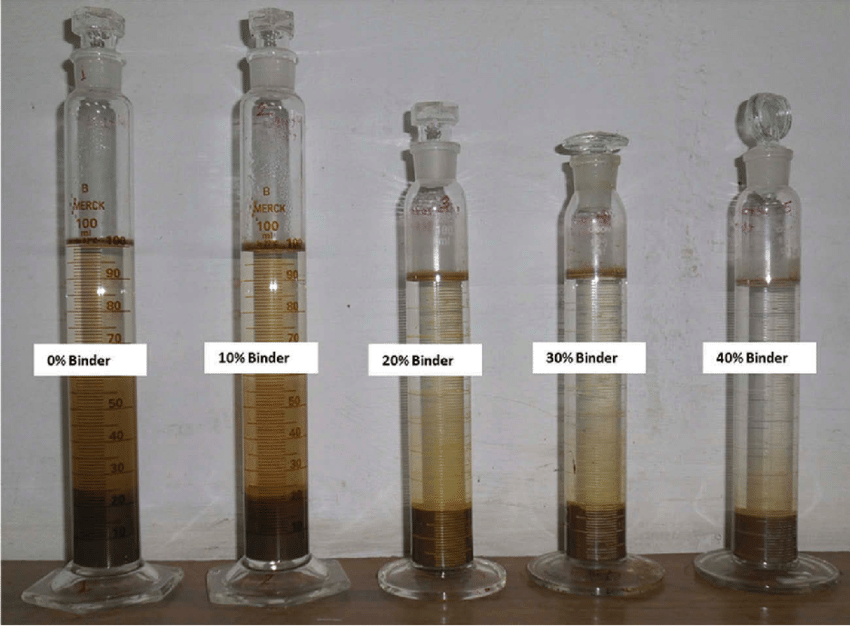
Free Swell Index (FSI) Testing:
The Free Swell Index (FSI) test is used to measure the swelling potential of fine-grained soils, particularly clay soils, when they are immersed in water. The test determines how much the soil expands or swells when exposed to moisture. It is important in evaluating the soil’s behavior under changing moisture conditions, particularly in regions with fluctuating wet and dry periods.
Purpose of Free Swell Index Testing:
The primary purpose of the FSI test is to assess the potential for soil expansion (swelling) when exposed to water. Soils with high swelling potential can cause significant damage to structures, roads, and pavements. The test helps in designing foundations, pavements, and embankments in such areas where swelling may occur.
Free Swell Index Test Procedure:
The procedure for conducting the Free Swell Index test typically involves the following steps:
- Soil Sample Preparation: A sample of fine-grained soil, typically in the form of clay, is taken and sieved to remove any particles larger than 4.75 mm.
- Initial Volume Measurement: A known volume of soil is placed in a graduated cylinder or similar container.
- Immersion: The soil is then immersed in distilled water for a specified period, usually 24 hours.
- Volume Measurement After Swelling: After 24 hours, the volume of the swollen soil is measured again.
Calculation of Free Swell Index:
The Free Swell Index is calculated as the percentage increase in the volume of the soil after immersion in water, using the following formula:
FSI = ((V2 - V1) / V1) × 100
Where:
V1 = Initial Volume of Soil (before immersion)
V2 = Final Volume of Soil (after immersion)
Interpretation of Free Swell Index:
The Free Swell Index (FSI) indicates the soil’s potential for swelling. The FSI values are classified as follows:
- Low Swelling Potential: FSI < 30%
- Medium Swelling Potential: FSI = 30-50%
- High Swelling Potential: FSI > 50%
Applications of Free Swell Index Test:
The FSI test is crucial in the following applications:
- Design of foundations in clayey soils prone to swelling
- Road and pavement design in areas with expansive soils
- Design of embankments and other soil structures
- Assessing the stability of soil under moisture changes
Test Method:
IS: 2720 (Part 40) – 1977 provides the standard guidelines for the Free Swell Index test procedure in India.
Want to speak to our Customer Care Executive?
Just Submit Your Contact Details and We’ll be get in Touch With You Shortly.