
Field CBR Testing

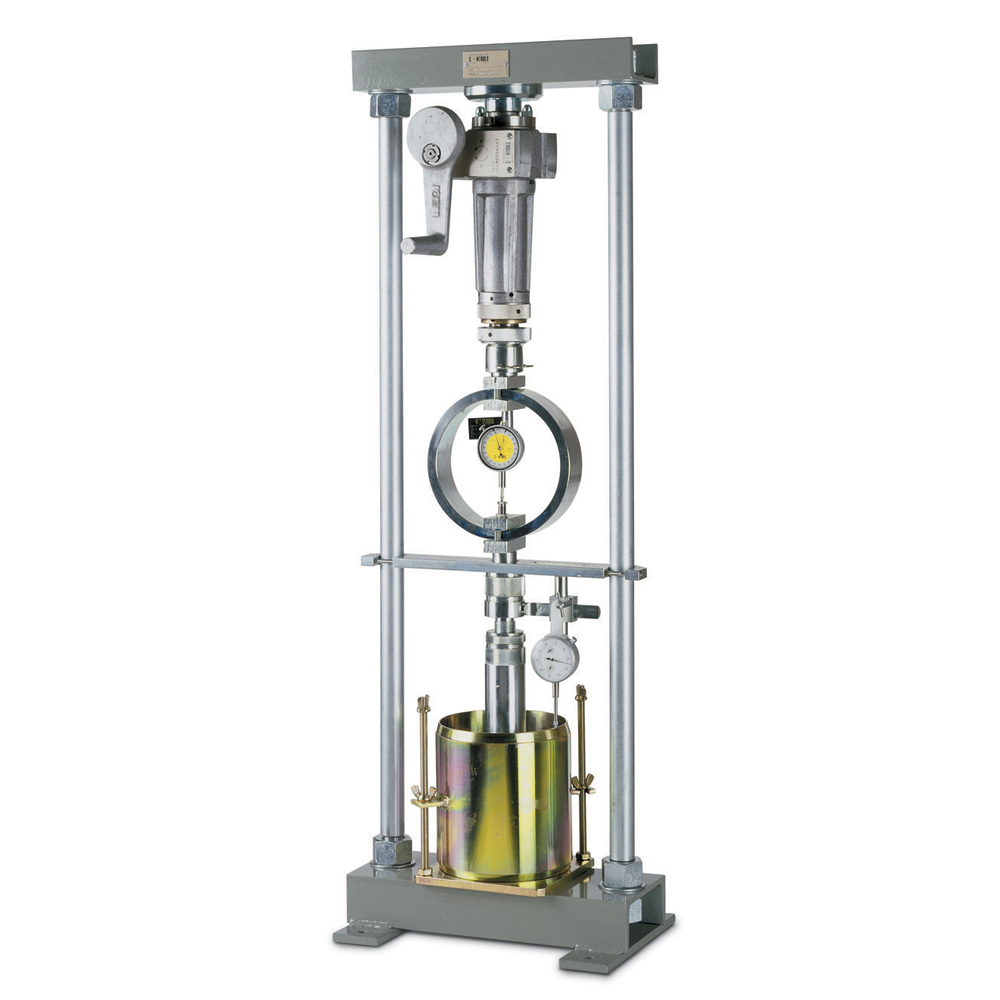
Field CBR (California Bearing Ratio) Testing:
The Field CBR Test is conducted to determine the strength of subgrade and sub-base materials directly at the site. It evaluates the load-bearing capacity of soils used in road and pavement construction. The test measures the pressure required to penetrate soil with a standard plunger and compares it to the pressure required for standard crushed stone.
Purpose of Field CBR Testing:
The primary objective of the Field CBR test is to assess the actual in-situ strength of the soil, which is used to design flexible pavements and to evaluate the suitability of the soil for use in roads, runways, and other civil structures.
Test Procedure for Field CBR:
- Preparation of Test Site: A flat surface is selected and cleared of any loose material. The soil surface is leveled and soaked (if required) to simulate worst-case moisture conditions.
- Loading Setup: A standard plunger of 50 mm diameter is mounted under a loading frame. Load is applied using a jack or reaction beam assembly.
- Penetration Test: The plunger is penetrated into the soil at a uniform rate of 1.25 mm/min, and the load readings are recorded at penetrations of 0.5 mm, 1.0 mm, 1.5 mm, 2.0 mm, etc., up to 12.5 mm.
- Soaking: If the test is to simulate worst-case (wet) conditions, the area is soaked for 4 days before the test.
Calculation of Results:
The CBR value is calculated as:
CBR (%) = (Test load / Standard load) × 100
Where:
- Test Load: Load required to cause a specified penetration in the soil.
- Standard Load: Load required for similar penetration in a standard material (13.2 kN for 2.5 mm and 20.0 kN for 5.0 mm penetration).
Field CBR Test Results:
CBR values are typically reported for both 2.5 mm and 5.0 mm penetrations, and the higher value is taken as the final result.
- 2.5 mm Penetration CBR (%)
- 5.0 mm Penetration CBR (%)
- Final CBR Value (%): Usually the higher of the two
Importance of Field CBR Testing:
This test is important because it:
- Provides a direct measure of soil strength under actual field conditions.
- Helps determine pavement thickness based on subgrade support.
- Evaluates improvement after compaction or stabilization.
Applications of Field CBR Testing:
- Design of flexible pavement layers for highways, runways, and rural roads.
- Assessment of soil compaction quality.
- Decision-making in selecting suitable construction materials for base/sub-base.
Test Method:
IS: 2720 (Part 31) – 1990 provides the standard procedure for conducting Field CBR Testing in India.
Want to speak to our Customer Care Executive?
Just Submit Your Contact Details and We’ll be get in Touch With You Shortly.