
Grain Size Analysis (Wet & Dry Analysis) Testing

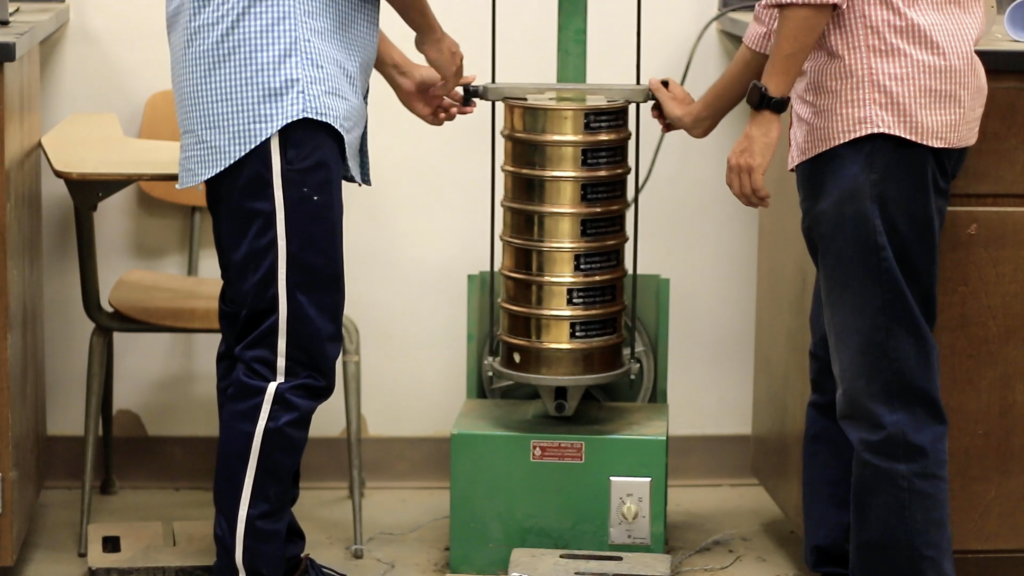
Grain Size Analysis (Wet & Dry Analysis) Testing:
Grain size analysis is a laboratory test used to determine the particle size distribution (gradation) of a soil sample. This test helps in understanding the composition of soil, which is important for evaluating its engineering properties such as permeability, compaction, and strength. Grain size analysis is usually performed using wet and dry sieving methods, depending on the soil type and size of particles.
Purpose of Grain Size Analysis:
The primary purpose of grain size analysis is to determine the distribution of soil particles by size. It helps in classifying soils, which is essential for designing foundations, pavements, and other civil engineering structures. The results provide insight into how the soil will behave under different conditions.
Wet and Dry Grain Size Analysis Methods:
There are two primary methods of performing grain size analysis: Wet sieving and Dry sieving.
Dry Grain Size Analysis:
- Used primarily for soils that do not contain clay particles.
- Involves sieving the soil sample through a series of standard sieves with progressively smaller mesh sizes.
- The mass of soil retained on each sieve is measured to determine the percentage of soil passing through each sieve.
Wet Grain Size Analysis:
- Used primarily for soils that contain fine particles, including silt and clay.
- The soil sample is first washed to remove fine particles, and then the remaining larger particles are sieved using a series of sieves.
- The wet method helps in separating particles that are bound by water and ensures accurate analysis of fine particles.
Procedure for Grain Size Analysis (Dry Method):
- Preparation of Soil Sample: A representative soil sample is collected and dried in an oven at 105°C to remove moisture.
- Sieving: The dried sample is passed through a set of sieves with progressively smaller mesh sizes, typically ranging from 4.75 mm to 0.075 mm.
- Weighing: The mass of soil retained on each sieve is measured.
- Calculation: The percentage of soil retained on each sieve is calculated and plotted on a grain size distribution curve.
Procedure for Grain Size Analysis (Wet Method):
- Preparation of Soil Sample: The soil sample is first mixed with water to disperse the fine particles.
- Sieving: The sample is then washed through a set of sieves, and the retained particles are separated by size.
- Drying: The washed sample is dried in an oven, and the mass retained on each sieve is measured.
- Calculation: The percentage of soil retained on each sieve is calculated, and the grain size distribution curve is generated.
Grain Size Distribution Curve:
Once the analysis is complete, a grain size distribution curve is plotted. The x-axis represents the sieve size (particle size), and the y-axis represents the cumulative percentage of soil passing through each sieve. This curve helps in determining the soil's classification and suitability for construction.
Classification of Soils Based on Grain Size:
Soils are classified into different categories based on their grain size distribution:
- Coarse-grained soils: Includes gravel and sand particles.
- Fine-grained soils: Includes silt and clay particles.
- Mixed soils: A combination of both coarse and fine-grained particles.
Applications of Grain Size Analysis:
Grain size analysis is used in various civil engineering applications, including:
- Designing foundations and pavements
- Determining soil permeability and drainage characteristics
- Assessing soil compaction and stability
- Classifying soil for construction projects and land use planning
Test Method:
IS: 2720 (Part 4) – 1985 provides the standard procedure for performing grain size analysis in India.
Want to speak to our Customer Care Executive?
Just Submit Your Contact Details and We’ll be get in Touch With You Shortly.